
 The old saying that a picture is worth a thousand words hasn’t gone out of fashion. If anything, it matters more now than it did a decade ago. People are more visual than ever, and the platforms they search on, whether that’s Google, Google Business Profile, Facebook, or Pinterest, are all built to surface images alongside, and sometimes instead of, written content. Despite this, photos are still one of the most under-used tools in small business marketing.
Where photos show up in search today
Search results have changed a lot since image marketing first became a talking point. Google’s results page now blends website links, map results, video, and images together depending on what you search for. Search for almost any product or service and you’ll see an image carousel sitting right in the results, often above the normal list of links.
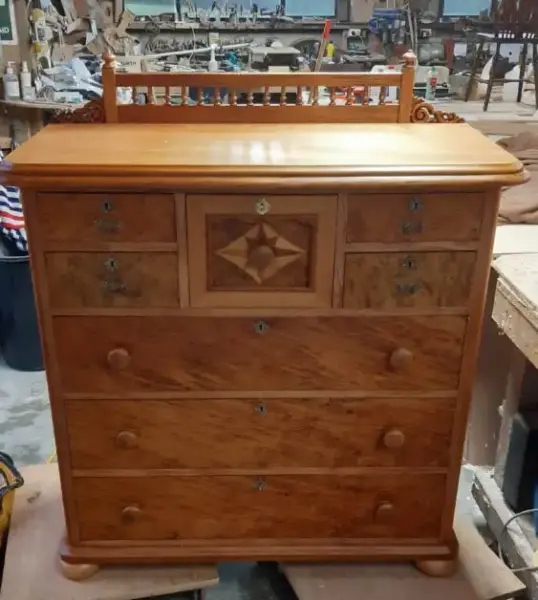
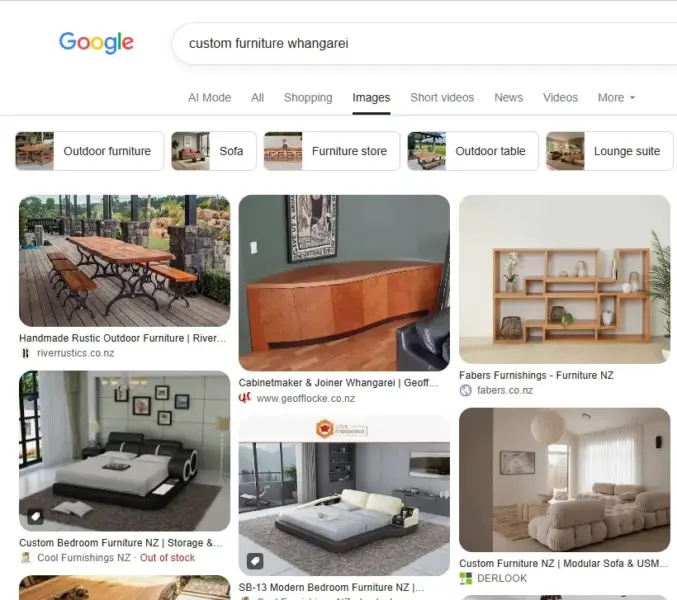
This matters most for visual or specialist products. Take a niche example: someone searching for a custom-made timber chest of drawers has a very specific need, and only a small number of businesses actually offer the right solution. Rather than clicking through website after website, that person may search through Google Images, scan a page of results from dozens of suppliers at once, and click through to whichever photo shows exactly what they’re picturing in their head.
The same logic applies to almost any visual trade or product, from kitchen renovations to custom fabrication to landscaping. If your best work isn’t showing up as an image someone can find, you’re relying entirely on your written content to do a job a photo would do faster. A tradesperson who has completed dozens of jobs but has no photos to show for any of them is effectively invisible in exactly the search results where a prospective customer is looking hardest.
Google Business Profile has become just as important as Google Images for local businesses. The photos attached to your GBP listing are often the first thing a potential customer sees before they’ve read a word about you, and listings with strong, regularly updated photos consistently perform better than those without. A profile with a handful of old, low-quality photos sends a signal about how active and well-run the business is, whether that’s a fair reflection or not.
What makes a photo worth using
Not every photo does this job equally well. Good natural light matters more than expensive equipment. A photo taken in daylight, with the work filling the frame rather than lost in a cluttered background, will outperform a dark, blurry phone snap almost every time. If you’re photographing a finished job, get close enough that the detail is actually visible, rather than a wide shot that could be of anything.
Where it makes sense, photograph the stages of a job rather than just the finished result. A clear before-and-after pair tells a customer more about what you actually did than a single after shot, and it works particularly well for trades, renovations, and anything involving visible transformation. For specialist or technical work, a photo that clearly shows the specific feature a customer is likely to be judging you on, a joint, a finish, a fitting, is worth more than a general shot of the whole job.
A decent phone camera is enough for most of this. You don’t need a professional photographer for routine work, though it’s worth considering for a portfolio of your best jobs or anything you’ll reuse across quotes, tenders, and your website for years. What matters far more than the camera is remembering to take the photo at all, and taking it properly rather than as an afterthought on the way out the door.
One practical thing worth building into the habit: get the customer’s agreement before publishing photos of their property, premises, or completed work, particularly for commercial or government contracts where there may be confidentiality requirements. A quick check at the time saves an awkward conversation later, and most customers are happy to say yes if you simply ask. It costs nothing to build this into how you close out a job, and it protects you from having to take a photo down after it’s already been shared.
The photo that won the contract
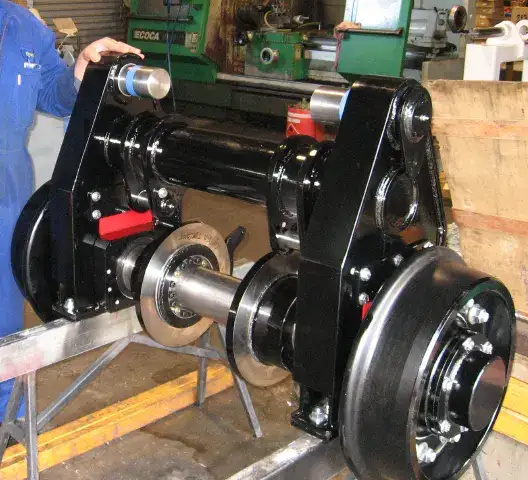 A good example of this came from one of our engineering clients. He ran a small custom fabrication business and on his website was a photo of a custom-built railway chassis, a genuinely specialist job that not many fabricators would have the experience to take on. The list of businesses capable of that kind of work is short, and standing out against other fabricators quoting on the same contract isn’t easy to do on paper alone.
He was approached by a potential customer because they saw a photo of exactly what they needed on his website. Ultimately, they won a large contract because of that photo.
It wasn’t a generic photo of his workshop or his team; it was a photo of the exact kind of thing the customer needed, already built, already proven.
When we talked about it afterwards, he was clear that the photo did more work than any amount of written explanation could have. The customer could see, in seconds, that this wasn’t a business promising it could handle the job. It was a business that had already done it.
This is the real power of photos in marketing, especially for trades, engineering, and manufacturing businesses. A written description of your capability asks the customer to take your word for it. A photo of the actual work removes the doubt. If you’ve completed a job that demonstrates exactly what a prospective customer needs, that photo is worth more than a page of copy about your experience.
Building the habit of photographing your work
One good photo can win one job. A habit of photographing your work, every time, is what builds a library you can actually draw on when the right opportunity comes along. The engineer in the story above only had the chassis photo to use because he’d photographed it as a matter of course when the original job was completed, not because he went looking for one specifically when the new contract came up.
The easiest way to build this habit is to make it part of finishing a job, not something separate to remember later. Photograph the completed work before you leave the site, name the file something sensible while it’s fresh in your mind, and file it somewhere you’ll actually be able to find it again in a year’s time. Doing this consistently across every job, rather than only the standout ones, means that when a quote or tender calls for proof of a specific kind of work, there’s a decent chance you already have it.
This matters more for specialist and B2B work than almost anything else in this article. Retail and hospitality businesses get plenty of natural opportunities to photograph their products and premises. A fabrication, engineering, or trade business often only has the job itself, once, to capture the kind of proof that wins the next contract.
Where AI-generated images fit in
AI image generation has moved fast, and it’s a genuinely useful tool for certain jobs. It’s well suited to illustrations, concept graphics, social media backgrounds, and infographics where you need a clean, on-brand visual and there’s no requirement for it to represent something real. For blog headers or general marketing imagery, AI-generated images can save time and produce a polished result.
Where AI images fall short is anywhere a customer needs proof. If someone is trying to work out whether you can build the thing they need, fix the problem they have, or deliver the result they’re after, an AI-generated image can’t show them that. It can only show them a plausible-looking version of it. The engineer’s story only works because the chassis in the photo was real, built by his business, for a genuinely similar job. An AI-generated render of a chassis wouldn’t have won that contract, and a customer who later discovered the photo wasn’t genuine would have every reason to lose trust in the business.
The practical rule is simple: use AI-generated images for illustration and decoration, and use real photos anywhere you’re trying to demonstrate capability, quality, or proof of work. Customers can usually tell the difference, and for trades, engineering, and other capability-driven businesses, that difference matters. Getting this the wrong way around, using an AI image to represent work you haven’t actually done, is the kind of thing that only needs to go wrong once to undo the trust a real photo would otherwise build.
Getting your photos found
Taking or sourcing a great photo is only half the job. If it’s not set up properly, it won’t get found. A few basics make a real difference:
- Name your image files properly. A file called “custom-railway-chassis-fabrication.jpg” tells Google what the image is. A file called “IMG4821.jpg” tells it nothing.
- Write proper alt text. Alt text describes the image for search engines and for people using screen readers. It should describe what’s actually in the photo, not be stuffed with keywords.
- Put images in context. An image surrounded by relevant text about the same subject will be understood and ranked far better than one dropped onto an unrelated page.
- Use real, original photos where you can. Stock photos are fine for generic use, but original photos of your own work carry far more weight with both customers and search engines, since they’re unique to you rather than duplicated across hundreds of other websites.
If you’re not sure how well your website images are set up for this, it’s worth raising with whoever manages your website, since small technical details in how images are added can have a real effect on whether they’re found at all. It’s a quick thing to check and an easy thing to get wrong, particularly on older websites where images were added years ago without much thought for how they’d be found.
Photo file size and page speed
 A great photo can still work against you if the file is too large. Modern phone cameras produce very high-resolution images, often several megabytes each, and uploading them straight to a website without resizing or compressing them first is one of the most common mistakes small business owners make. A page loaded with full-size photos can take several seconds longer to load than it should, and both visitors and Google notice the difference.
Page speed has been a factor in Google’s rankings for years, and it also affects whether a visitor sticks around long enough to see your photos at all. Someone searching on their phone, which is most people, will often leave a slow-loading page before it finishes rendering, which means the very photo you’re relying on to win them over never actually gets seen. All the effort that goes into taking a great photo and getting the SEO right around it is wasted if the page takes too long to load.
Most modern website platforms can compress and resize images automatically to some degree, but this isn’t something to assume is being handled properly without checking. If you’re regularly adding photos to your website yourself, it’s worth resizing them to a sensible size before upload rather than relying entirely on the website to do it for you. If you’re not sure whether your website is handling this well, it’s a reasonable thing to ask whoever looks after your site to check.
Pinterest and social image marketing
The same principle carries over once you look beyond Google, since photos do just as much work on social platforms. Pinterest is still a strong channel for visual products such as interior design, fashion, food, and craft, where people are actively looking for ideas and inspiration rather than a specific supplier. It works differently to Google Images: rather than searching for a solution to a problem, Pinterest users are browsing and saving images they like to their own boards, which then get shared further. For a business in one of these categories, a well-photographed product can end up in front of people who weren’t searching for it at all, simply because someone else liked it enough to save it.
Facebook and Instagram remain the more useful platforms for most NZ small businesses, particularly for photos of completed work, before-and-after shots, and behind-the-scenes content. A strong photo posted at the right time can reach far more people organically than a written post ever will. The businesses that post this kind of content consistently, rather than only when they remember to, tend to see the most benefit from it over time.
⚡TL;DR: Photos, AI Images, and Winning Customers Online
Photos are one of the most under-used marketing tools for NZ small businesses, and the right photo can do more to win a customer than a page of copy.
- Photos show up in search now more than ever, through Google Images, image carousels, and Google Business Profile listings.
- Good light and a clear subject beat expensive equipment. A well-lit, close-up phone photo of the actual work outperforms a dark or cluttered one every time.
- Real proof beats a written claim. An engineering client won a large rail contract by showing a photo of a custom chassis he’d already built for a similar job, rather than describing his capability in words.
- Make photographing finished work a habit, not an afterthought, so you have the right photo on hand when the right opportunity comes along.
- AI-generated images have a place for illustration and decoration, but they can’t substitute for a real photo when a customer needs proof you can do the job.
- Image SEO still matters. File names, alt text, and page context all affect whether your photos actually get found.
- Oversized photo files slow your website down, which undoes the benefit of having great photos in the first place.
The bottom line: if you’re only putting effort into the words on your website and ignoring the photos, you’re leaving business on the table.
How Energise Web can help
We help NZ small businesses make the most of their photos, from sourcing and preparing images through to setting them up properly on your website so they actually get found in search. If your website’s images are working against you rather than for you, or you’re not sure your Google Business Profile photos are pulling their weight, get in touch with us and we’ll take a look.